Reel Layout Variations Shape Bonus Chain Reactions in Digital Gaming Titles
Paul Braun · Oct 3, 2026

Reel Layout Variations Shape Bonus Chain Reactions in Digital Gaming Titles
Reel layout configurations in digital gaming titles determine how symbols align and interact during bonus sequences, creating distinct patterns for chain reactions that extend play and multiply outcomes. Traditional setups with fixed rows and columns support structured payline evaluations while variable formats expand or contract reel heights to alter symbol adjacency and trigger cascading effects. Observers note that these mechanical differences influence the frequency and scale of bonus activations across various providers.
Traditional Reel Structures and Their Bonus Mechanics
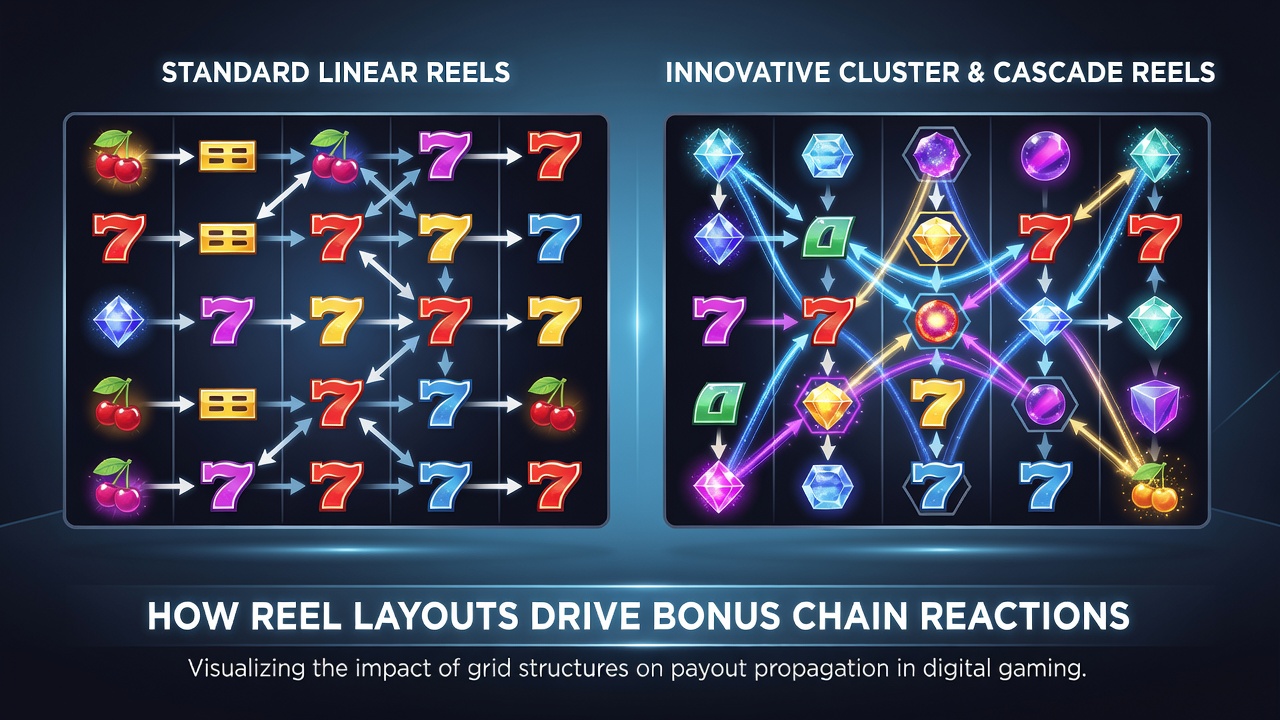
Standard five-reel three-row grids with fixed paylines establish clear pathways for symbol matches that initiate bonus features such as free spins or respins. When winning combinations form on these lines the layout clears matched symbols and drops replacements from above which can produce sequential reactions if new alignments occur immediately. Data from industry analyses shows that this vertical drop mechanic sustains chains more reliably in titles where reel heights remain constant because symbol positions follow predictable trajectories without random expansions.
Payline density further modulates chain potential since denser line configurations increase the chance that falling symbols complete multiple overlapping matches in a single tumble sequence. Researchers have documented how three-row constraints limit horizontal expansion yet concentrate vertical cascades into tighter result windows that favor repeated activations within the same bonus round.
Variable and Expanding Reel Formats
Megaways and similar variable-reel systems introduce dynamic row counts that range from two to seven symbols per reel which directly affects adjacency calculations during bonus phases. Each spin recalculates winning ways based on the current height profile and this variability allows chain reactions to branch across wider horizontal spans when taller reels appear. Studies indicate that titles employing these formats register higher average chain lengths in free spin modes because expanding reel heights create additional symbol contact points that sustain tumbles beyond what fixed grids typically achieve.
Cluster-pay layouts dispense with lines altogether and instead require groups of adjacent symbols to trigger removals and replacements. The absence of directional constraints permits chain reactions to propagate in any direction including diagonal and vertical patterns that fixed-line systems cannot replicate. Evidence from gameplay databases reveals that cluster mechanics often produce prolonged bonus sequences when large groups clear simultaneously leaving space for multiple waves of new symbols to descend and form secondary clusters.
Symbol Interaction and Chain Amplification
Wild symbols and multipliers interact differently depending on whether the underlying reel layout supports fixed or variable positioning. In fixed grids wilds typically occupy static columns and extend chains by substituting within predetermined lines while in variable systems they can land across changing heights to connect distant symbol groups. According to American Gaming Association reports on game design trends, titles that combine variable reels with sticky wilds during bonus rounds demonstrate elevated chain counts because the expanding grid creates fresh opportunities for wilds to bridge new combinations after each removal.
Scatter symbols that activate free spins also behave according to layout rules since their placement requirements scale with reel dimensions. Wider or taller configurations increase the surface area available for scatters to land which in turn raises the probability that bonus entry coincides with an initial winning cluster or line. Once inside the bonus the same layout continues to govern how subsequent cascades build multipliers or additional spins through repeated symbol clearances.
Comparative Outcomes Across Layout Types
Comparative data across providers demonstrates measurable differences in bonus duration tied to reel architecture. Fixed payline titles tend toward shorter yet more frequent chains because each tumble must realign on the same line set whereas Megaways and cluster formats generate longer sequences when reel height or adjacency rules allow symbols to connect in multiple configurations simultaneously. A European Gaming and Betting Association overview of mechanical trends notes that these distinctions appear consistently across thousands of tracked sessions without regard to specific themes or volatility settings.
Developers adjust reel parameters such as reel count row variability and symbol distribution to calibrate chain frequency during bonus design phases. Higher reel counts paired with cascading rules can extend reaction chains by providing more vertical space for symbols to drop while narrower grids concentrate activity into rapid successive evaluations that emphasize multiplier growth over length.
Conclusion
Reel layout variations establish the foundational rules that govern how bonus chain reactions unfold in digital gaming titles by controlling symbol alignment possibilities removal patterns and replacement trajectories. Fixed payline grids promote predictable vertical cascades while variable and cluster systems enable branching multi-directional sequences that extend bonus rounds. These mechanical relationships remain consistent across different providers and continue to shape feature outcomes in releases through October 2026 and beyond as design teams refine configurations to balance chain length with overall game pacing.